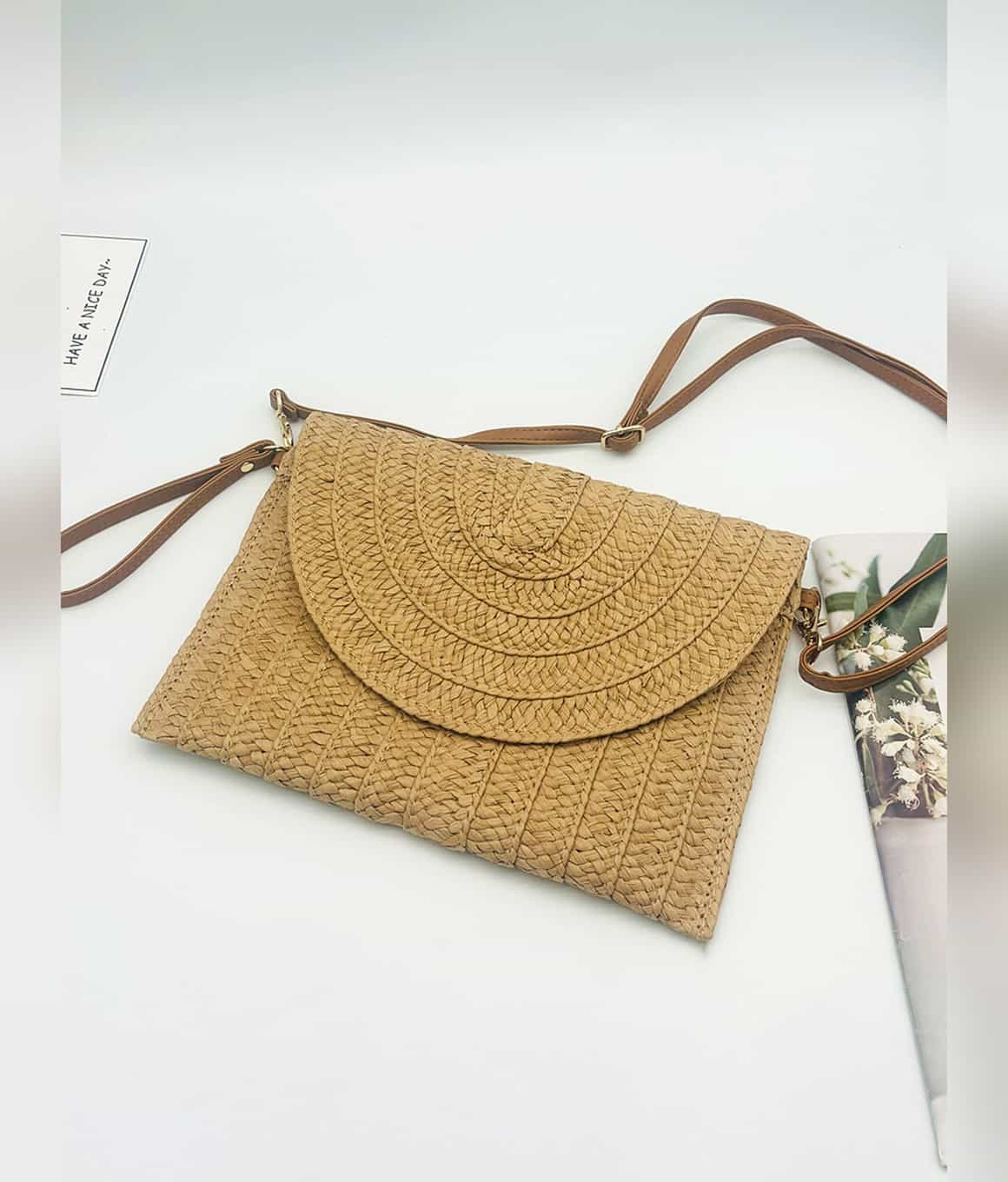
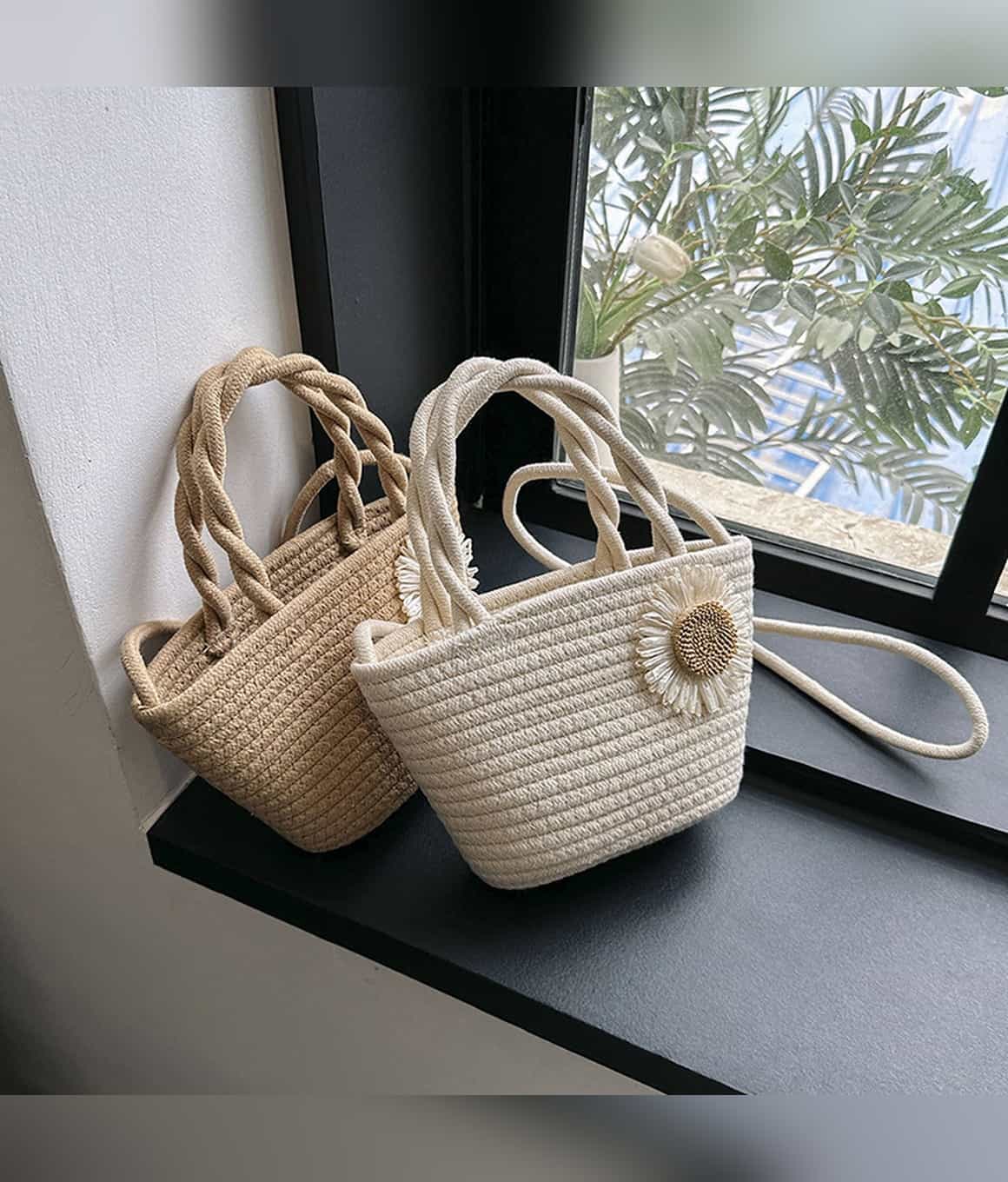
The Art of Handweaving: From Laizhou Artisans to Your Wardrobe
Behind every Overvoy woven bag is a story most bags never get to tell: a story of natural fibers, patient hands, and a weaving tradition that has survived for centuries in the workshops of Laizhou, China. In an era of mass production, this is what makes a handwoven natural bag different, and why it is worth owning one. Here is the journey your bag makes, from raw fiber to a finished piece on your shoulder.
Where it begins: natural fibers
The materials we use — bamboo, straw, cotton, raffia, and willow — are among the most sustainable on earth. Bamboo matures in three to five years and regenerates from its own root system. Cotton grows as a renewable crop. Raffia comes from palm leaves that regrow. Willow and straw are agricultural byproducts given new life. Each material has its own character, and the weaver chooses the fiber that best suits the bag being made.
The fiber used for weaving is chosen for the right properties. Stalks that are too young are weak; fibers that are too old become brittle. A skilled selector reads raw materials the way a vintner reads a vineyard, choosing only what will weave cleanly. This selection process is the first act of craftsmanship, and it happens long before the weaving begins.
From stalk to strips
Once harvested, the raw material is prepared, and this is where the craft truly begins. For bamboo, the stalk is split into thin, even strips. For cotton, the cord is spun to the right tension. For straw and raffia, the fibers are sorted and softened. Each material demands a different preparation, but all share one requirement: every piece must be checked by hand for uniformity. In Laizhou, the best weavers can produce strips so consistent they look machine-cut, yet every one is shaped by hand and eye.
- Splitting: The stalk is divided lengthwise into ribbons using a specialized knife.
- Smoothing: Each strip is trimmed so its edges are clean and splinter-free.
- Shaping: Strips are cut to the widths a design needs, from fine lace-like strands to sturdy structural bands.
- Preparing: Strips are kept slightly supple so they bend without cracking during weaving.
This preparation alone takes hours. A single bamboo stalk yields dozens of strips, and each one must be inspected and graded before weaving can begin. The finest strips are reserved for the most visible parts of the bag; the sturdier ones form the structural base. In some workshops, the preparation and weaving are done by different specialists, each mastering one part of the process.
The weave: hours of patient handwork
Woven bags are not stamped out of a mold. Each one is built strand by strand, and a single bag can represent many hours of concentrated handwork. The weaver works from the base upward, locking each strip into place so the structure grows as one continuous piece. This is why a well-woven bag holds its shape: there is no glue holding it together, only geometry and tension.
Common weave patterns each give a different character. A tight, dense weave is stronger and more formal, ideal for an evening clutch or structured tote. A looser, open weave is lighter and more casual, perfect for a beach bucket that needs to breathe. The pattern is chosen not just for looks but for how the finished bag must behave under real use.
The weaving technique also determines the bag's flexibility. A basket weave creates a rigid surface that stands on its own, while a twill weave allows more movement and drapes naturally. The choice of weave is a design decision that affects how the bag feels in your hand, how it ages, and how long it lasts.
A brief history of bamboo weaving in China
Handweaving in China dates back thousands of years. Archaeological evidence shows woven baskets from the Neolithic period, and the craft has been practiced continuously ever since. In ancient China, weaving was not just functional; it was an art form. Imperial workshops produced screens, furniture, and decorative objects that were prized for their intricacy and beauty. For the wider context of living craft traditions, see the UNESCO Intangible Cultural Heritage portal, and for the craft itself, the Britannica overview of basketry.
In Shandong province, where Laizhou sits, handweaving became a regional specialty because of the area's access to quality natural fibers and its coastal trade routes. The craft was passed down through family workshops, with each generation refining techniques and developing new patterns. By the twentieth century, Laizhou was known across China for its woven goods, and the tradition continues today in the workshops where Overvoy bags are made.
Laizhou: a city that weaves
Laizhou sits on the coast of Shandong province, and for generations bamboo and grass weaving have been woven into the identity of the region. Techniques pass from master to apprentice, from parent to child, carrying with them an understanding of materials that no factory manual can capture. When you buy a Laizhou-woven bag, you are supporting workshops where this knowledge lives on, and helping ensure the next generation still finds value in the craft.
The workshops are small, often family-run, and the artisans take pride in their work. A master weaver can produce a bag in a fraction of the time it would take a novice, but speed is not the goal. Quality is. Each bag is inspected for even tension, clean edges, and structural integrity before it leaves the workshop. This attention to detail is what separates a bag that lasts years from one that falls apart in a season.
Why handmade matters in a machine world
Machine-made baskets are uniform, fast, and cheap, but they lack what hand-weaving provides: structure that flexes instead of cracking, joins that tighten with use, and a surface with natural, honest variation. No two handwoven bags are identical, and that is a feature, not a flaw. The slight differences in tone and texture are the signature of a human hand, and they make each bag one of a kind.
There is also a sustainability argument for handmade. A handwoven bag uses less energy than a machine-made one, produces less waste, and supports local economies rather than global supply chains. When you choose handmade, you are choosing a smaller footprint and a larger story.
The eco-luxe philosophy
Overvoy was built on a simple idea: beautiful accessories should not cost the earth. Choosing handwoven natural fibers means choosing materials that are renewable, biodegradable, and low-carbon to produce. It also means choosing objects designed to be kept and repaired, not tossed aside when a trend fades. That is what we mean by eco-luxe, and it is the thread that runs through every woven bag we make.
Eco-luxe is not about compromise. It is about recognizing that the most luxurious things are often the simplest: materials that grow without replanting, a process that uses hands instead of machines, and a product that gets better with age. A handwoven bag embodies all three. It is proof that sustainability and style are not opposites; they are the same thing when the material and the maker are right.
Bringing the craft home
When your Overvoy bag arrives, you are not just receiving an accessory. You are receiving the work of a grove that grew in sunlight, a weaver who shaped it by hand, and a tradition that refused to disappear. Care for it well, and it will carry that story for years. Our bamboo care guide shows you how to keep it beautiful.
Each bag comes with a small card telling you about the artisan who made it and the tradition behind the weave. We believe that knowing the story of what you carry makes the carrying richer. It is a reminder that somewhere in the world, a pair of hands made something beautiful just for you.
Frequently asked questions
How long does it take to weave a bamboo bag?
A single handwoven bag takes hours of work depending on its size and the tightness of the weave. A large tote with a tight weave can take a full day.
Why do handwoven bags cost more than machine-made ones?
Because each one represents hours of skilled handwork and a renewable material chosen by eye, not by formula. You are paying for time, skill, and sustainability.
Is bamboo weaving sustainable?
Deeply. Bamboo regenerates without replanting, grows fast, and biodegrades fully at end of life.
Are Overvoy bags handmade?
Yes. Every bag is hand-woven by artisans in Laizhou using traditional techniques.
Can a handwoven bag be repaired?
Yes. One of the great advantages of handwoven bags is that a skilled artisan can re-weave loose strands or fix damage, extending the bag's life significantly.
Where is Laizhou?
Laizhou is a city on the coast of Shandong province in eastern China, known for its bamboo and grass weaving tradition.
The bottom line
A handwoven bag is a small piece of living craft you can carry every day. It connects your wardrobe to a workshop, a weaver, and a tradition, and it is built to last long enough to earn that connection. Discover the full collection and find the weave that belongs in your life.