How to Clean and Care for a Handwoven Bag (and Prevent Cracking)
A handwoven bag is durable, but it is still a natural material, and natural materials reward attention. The short version of good care is this: keep it dry, brush it clean, and store it stuffed in a breathable place. Everything else is detail. This guide walks through daily habits, deep cleaning, drying, and the storage routines that prevent the two real enemies of natural-fiber bags, cracking and mildew.
Why woven bags need specific care
Natural fibers — bamboo, straw, cotton, raffia, and willow — are strong, but they respond to their environment: too much moisture swells the fibers, and prolonged dryness or rough handling can split them at the weave points. The good news is that most damage is preventable with habits that take seconds. Unlike synthetic bags that degrade silently, a woven bag shows you when it needs attention, and that visibility is part of why well-cared-for woven bags last so long.
Daily habits that protect your bag
- Empty it daily. A heavy bag strains the handles and base weave over time. Carry only what you need.
- Wipe down after use. A soft, dry cloth removes dust and skin oils before they settle into the weave.
- Avoid overloading. Bamboo is strong, but the woven structure has natural limits. Keep the bag to its intended load.
- Keep it out of direct sun for long stretches. Constant strong sunlight can dry and lighten the natural surface.
- Set it down gently. Dropping a bamboo bag onto a hard surface can crack the weave at impact points.
How to clean a woven bag step by step
You rarely need water to clean a woven bag. In most cases a dry brush is the best tool because it lifts dust out of the weave without wetting the fibers.
- Remove the contents and turn the bag upside down to shake out loose debris.
- Brush gently with a soft-bristled brush (a dry toothbrush works well for tight weave) moving in the direction of the weave.
- For spots, use a barely damp cloth and wipe the affected area only, then dry it immediately with a soft towel.
- For stubborn grime, mix a drop of mild soap with water, dip a cloth, wring it almost fully dry, and wipe. Never soak the bag.
- Dry thoroughly at room temperature, away from heaters and direct sun, before storing.
The key principle is minimal moisture. Natural fibers absorb water at the weave joints where strips overlap, and those joints are the weakest points. A quick wipe is fine; a soak is not. If you need to clean the interior, use the same barely-damp approach and leave the bag open to air dry completely before closing it.
Material-specific care notes
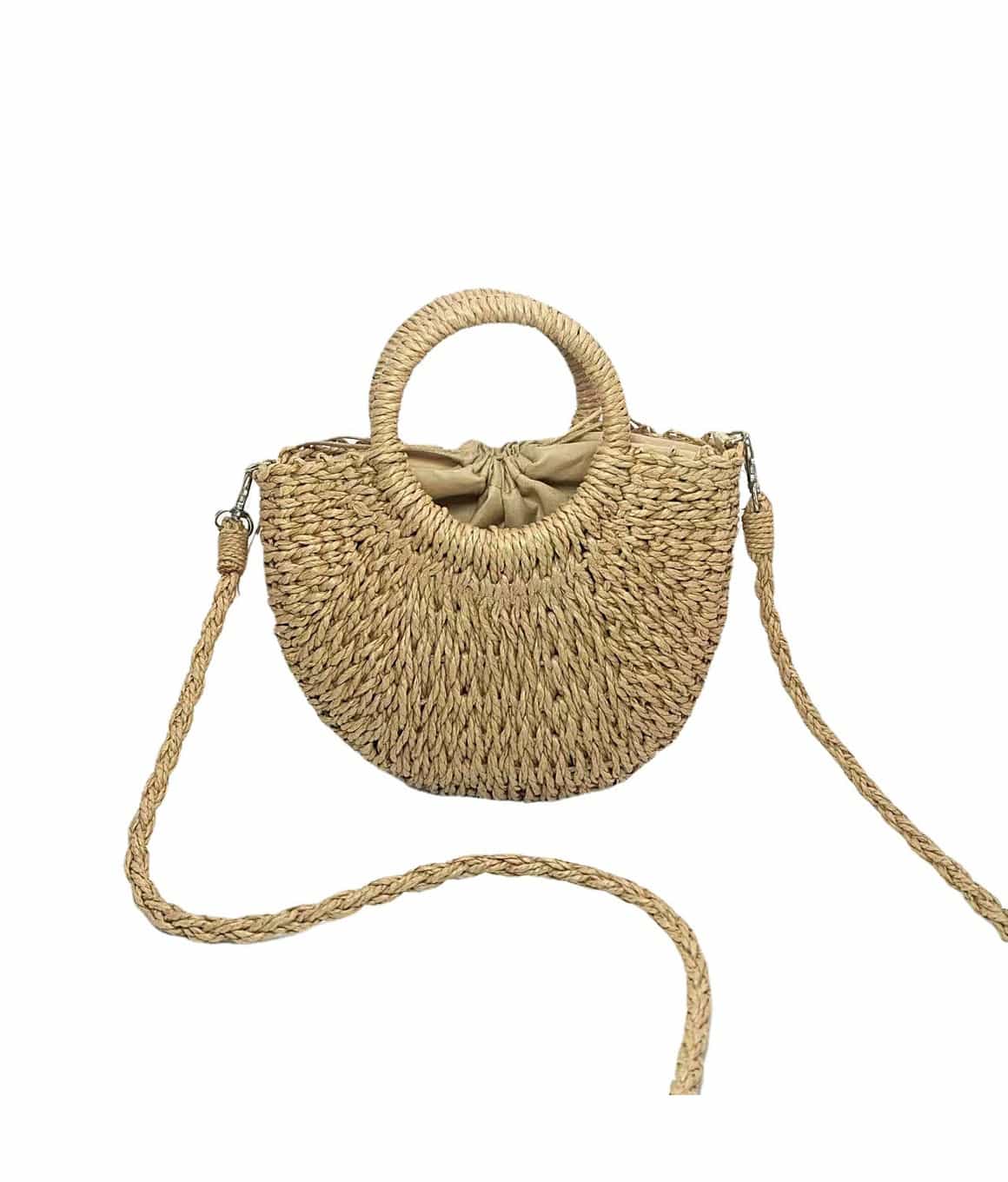
- Straw and raffia: The most moisture-sensitive. Use only a dry brush. If the straw gets wet, air dry immediately and reshape while damp.
- Bamboo and willow: Naturally more water-resistant. A barely damp cloth is safe for spots. Occasional conditioning with food-safe oil keeps handles supple.
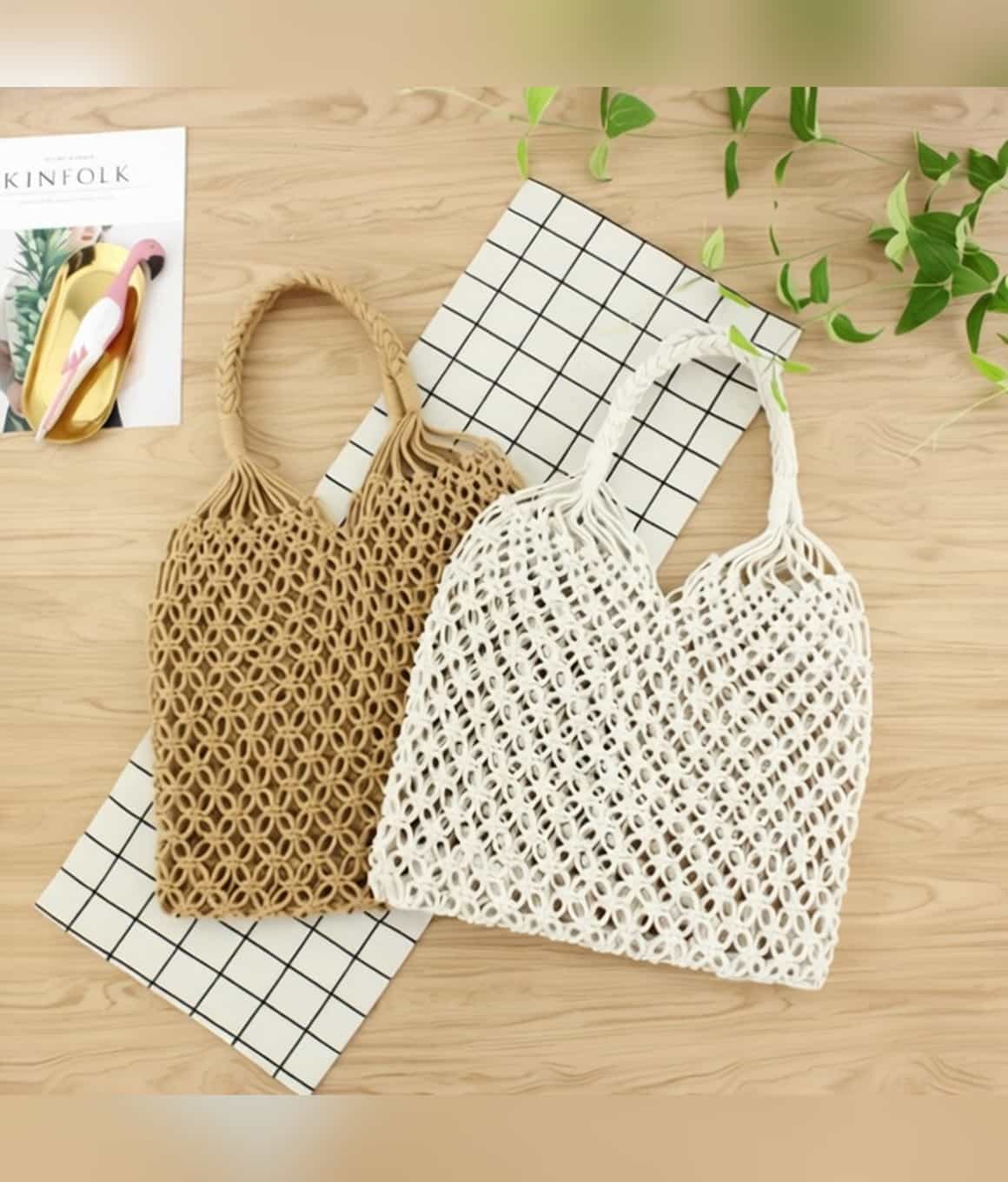
- Cotton and macrame: The most forgiving. Spot clean with a damp cloth. Do not machine wash. Air dry away from heat.
How to prevent cracking
Cracking is the most common reason woven bags get retired early, and it is almost always preventable. Cracks usually appear where the weave is under repeated stress, such as the base corners, handle roots, and the top edge.
- Don't let the bag sit empty and flattened. An unstuffed bamboo bag loses its shape, and creased weave is vulnerable to splits.
- Keep it out of extreme dryness. Very dry air makes bamboo brittle. If your home is dry in winter, a little humidity in the room helps, and occasional conditioning with a food-safe oil on the handle areas can keep the fiber supple. Test any oil on an inconspicuous spot first.
- Avoid sharp impacts. Dropping a heavy bamboo bag onto a hard corner can crack the weave. Set it down gently.
- Rotate your bags. If you carry the same bamboo bag daily, the stress points never rest. Rotating with another bag extends the life of both.
- Don't sit on it. It sounds obvious, but a bamboo bag left on a chair can be sat on accidentally, and the concentrated weight can crack the weave instantly.
What if the bag gets wet?
Rain happens. A quick splash is not a disaster, but prolonged dampness is the main cause of mildew and fiber distortion in bamboo bags.
- Blot the bag immediately with a dry towel to lift surface water.
- Let it air dry naturally at room temperature, away from heaters and direct sun.
- Do not use a hairdryer; sudden heat can warp or crack the fiber.
- Once fully dry, brush it gently to restore the surface.
If the bag was soaked through, let it dry for at least 24 hours before using it again. The weave joints take longest to dry, and using a damp bag can stretch or distort the shape. On the general science of why damp materials grow mold, the U.S. EPA mold guidance is a useful reference. For our complete view on which natural materials handle moisture best, see the bamboo vs rattan vs straw comparison.
How to store a woven bag correctly
Storage decides how a natural-fiber bag looks when you reach for it next season.
- Stuff it. Fill the bag with tissue paper or a soft cloth to hold its shape, never with heavy objects.
- Use a breathable dust bag. Avoid airtight plastic, which traps moisture and can cause mildew.
- Keep it upright on a shelf, not crushed under other bags.
- Store in a cool, dry place. A wardrobe is ideal; a damp basement or hot attic is not.
- Don't hang it by the handles. Hanging a heavy bamboo bag distorts the handle weave over time.
For long-term storage between seasons, wrap the bag loosely in a cotton pillowcase and place it on a shelf where nothing rests on top. Check it every few weeks for any signs of mildew, especially in humid climates.
Seasonal care calendar
Different seasons bring different challenges for bamboo bags. Here is a simple care calendar to follow:
- Spring: Inspect your bag after winter storage. Brush off any dust and check for mildew or dryness.
- Summer: The busiest season for bamboo bags. Wipe down after beach or pool days, and avoid leaving the bag in a hot car.
- Fall: Before storing summer bags, clean them thoroughly and stuff them for storage.
- Winter: If your home is dry, consider a small humidifier in the room where you store natural bags. This prevents cracking across all woven materials.
What to do if you notice damage
Even with the best care, a bamboo bag can show wear over time. Here is how to handle common issues:
- Loose strand: If a single strand comes loose, do not pull it. Tuck it back into the weave or trim it carefully with scissors. A loose strand is a sign the weave is settling, not failing.
- Small crack: A minor crack at a stress point can sometimes be stabilized with a tiny drop of clear glue on the inside of the weave. Do not use superglue on the visible surface.
- Handle wear: The handles take the most stress. If they start to feel loose, reduce the load you carry and consider having a leatherworker or artisan reinforce them.
- Mildew: Brush it off in a dry area, wipe with a barely damp cloth, and dry thoroughly. Persistent mildew may need professional cleaning.
The beauty of a handwoven bamboo bag is that most damage is repairable. Unlike a synthetic bag that goes to landfill when it cracks, a bamboo bag can be mended and kept for years more.
Why handwoven is worth the care
Every Overvoy bag is hand-woven by artisans using traditional techniques. Unlike mass-produced bags, a handwoven piece can be repaired: if a strand loosens after years of love, a skilled hand can often re-weave it rather than replace the bag. That repairability, paired with proper care, is why a handwoven bag can genuinely be a decades-long companion. Learn more about the craft of handweaving and the artisans behind your bag.
Frequently asked questions
Can I wash a bamboo bag with water?
Avoid soaking it. Clean with a soft brush and use water only sparingly on spots, drying immediately.
How do I remove mildew from a bamboo bag?
Brush off surface mildew in a dry, ventilated area, wipe with a barely damp cloth, then dry thoroughly in sunlight for a short period. Persistent mildew on a natural bag is best handled by a professional.
Why is my bamboo bag cracking?
Cracks usually come from dryness, overloading, or storage while flattened. Follow the prevention steps above.
Can I oil my bamboo bag?
A food-safe oil can help supple, dry handles, but test on an unseen area first and use very little.
How often should I clean my bamboo bag?
A quick brush after each use is ideal. A deeper clean with a damp cloth is only needed when the bag is visibly dirty.
Can I use a bamboo bag in the rain?
A light drizzle is survivable if you dry the bag properly afterward. Heavy rain should be avoided.
How long does a bamboo bag last with proper care?
A well-made, well-cared-for bamboo bag can last five to ten years or more, developing a beautiful patina as it ages.
The bottom line
Woven bags are low-maintenance if you follow three rules: keep them dry, brush them clean, and store them stuffed in a breathable place. Do that, and your handwoven tote will still look elegant years from now, carrying its story of handcrafted natural material with you.